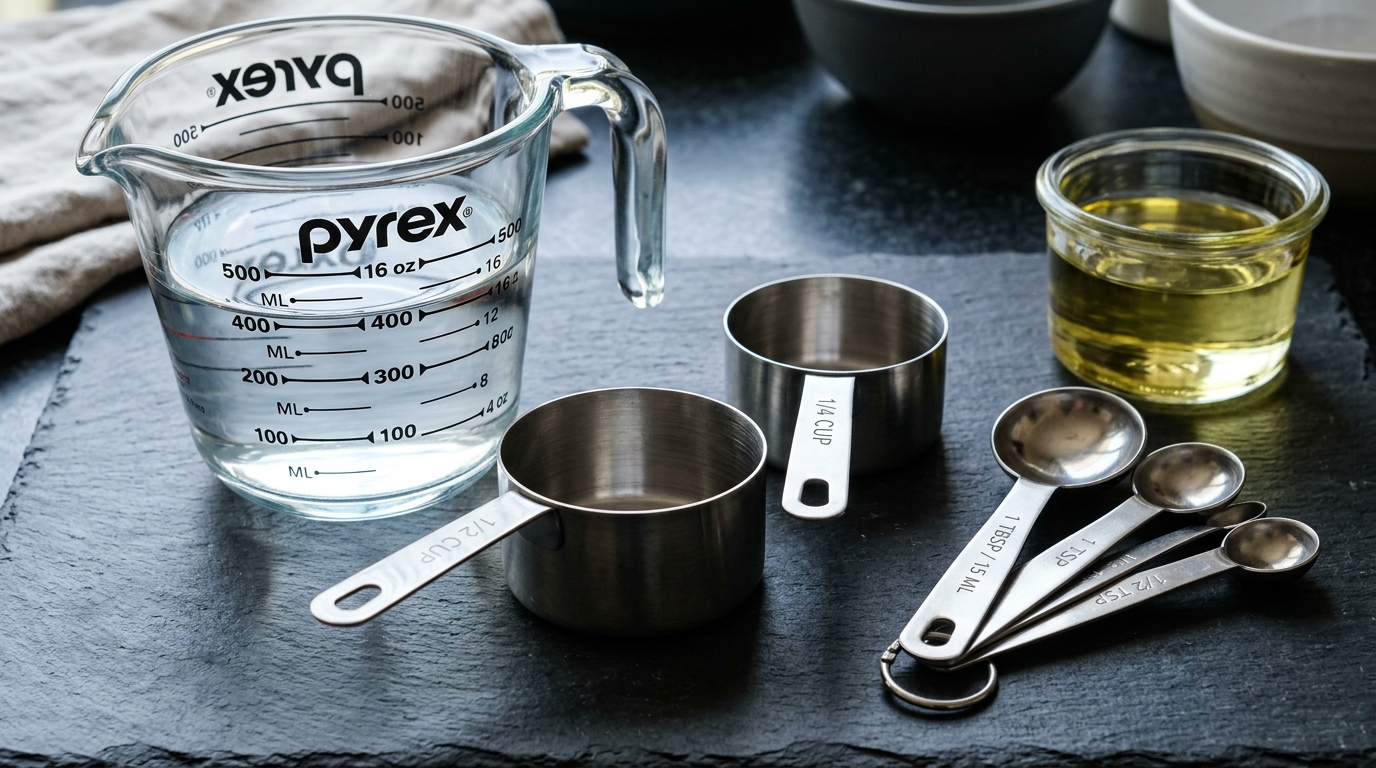
American and British fluid ounces differ because they descend from separate historic gallon standards. America preserved the 1707 wine gallon of 231 cubic inches (128 ounces at 29.5735 mL). Britain created the 1824 Imperial gallon of 277.42 cubic inches (160 ounces at 28.4131 mL). While an Imperial gallon is twenty percent larger than a US gallon, each Imperial fluid ounce is four percent smaller. Calculate liquid amounts using our mL to ounces calculator or explore our guides on bottle sizes in ounces and cooking measurements.
US vs UK Fluid Ounces Volume Comparator
Select a preset or input values to compare American, Imperial, and metric volumes instantly.
What Is a Fluid Ounce?
A fluid ounce is a historic unit of liquid capacity used across English-speaking nations, shaped by trade traditions and royal standards rather than decimal metrics.
What Does fl oz Mean?
The abbreviation fl oz denotes fluid ounce. Fluid signifies volumetric capacity rather than dry mass, while ounce derives from the Latin uncia (one-twelfth part).
Fluid Ounces Measure Volume
Fluid ounces measure internal vessel capacity. An eight-ounce cup contains identical volume whether holding water, vegetable oil, or syrup. See our density guide for fluid mechanics.
Fluid Ounces vs Ounces of Weight
Fluid ounces measure spatial volume, whereas avoirdupois ounces measure weight on a scale (28.3495 grams). Fluid ounce weight varies with liquid density. Water weighs 1.043 dry ounces per fluid ounce, whereas honey weighs 1.42 dry ounces. Our liquid density database provides detailed values.
How Are US and UK Fluid Ounces Different?
The difference stems from distinct national gallon definitions. While sharing an identical unit name, their actual liquid volumes differ by four percent.
US Fluid Ounce
The United States Customary fluid ounce serves as the standard liquid unit in America, legally defined by NIST at 29.5735295625 milliliters. US nutrition panels round this to 30 milliliters.
UK Imperial Fluid Ounce
The British Imperial fluid ounce remains the historic benchmark in the UK and Commonwealth, defined under the 1824 Weights and Measures Act at 28.4130625 milliliters.
US vs UK Fluid Ounce in Milliliters
In milliliters, one US fluid ounce holds 29.5735 mL, while one UK fluid ounce holds 28.4131 mL. The American unit holds 1.1604 mL more, making it 4.084 percent larger.
The Gallon Split Architecture: Historical Roots of US and UK Fluid Ounces
Figure 1: Mathematical breakdown showing how dividing a smaller US gallon into 128 parts produces a larger fluid ounce than dividing an Imperial gallon into 160 parts.
Why Is a US Fluid Ounce Larger Than a UK Fluid Ounce?
An American fluid ounce is larger than a British fluid ounce due to historical gallon standards and fractional subdivisions chosen by lawmakers.
The Difference Between US and Imperial Gallons
Queen Anne standardized the wine gallon at 231 cubic inches in 1707. America retained this unit. In 1824, Britain created the Imperial gallon of 277.42 cubic inches (ten pounds of water), making it twenty percent larger than the US gallon.
How Many Fluid Ounces Are in a US Gallon?
The United States divides a gallon into 128 fluid ounces (four quarts, eight pints, sixteen cups). Dividing 3,785.41 milliliters by 128 yields 29.5735 milliliters per US fluid ounce.
How Many Fluid Ounces Are in an Imperial Gallon?
The British Imperial gallon divides into 160 fluid ounces (four quarts, eight pints at twenty ounces each). Dividing 4,546.09 milliliters by 160 yields 28.4131 milliliters per UK fluid ounce.
How Gallons Determine the Size of a Fluid Ounce
Fluid ounce volume equals gallon capacity divided by unit count. Although the British gallon grew twenty percent in 1824, Parliament divided it into twenty-five percent more ounces (160 versus 128), making each Imperial fluid ounce smaller.
US Fluid Ounces vs UK Fluid Ounces Conversion Chart
Navigating culinary recipes and commercial packaging requires rapid conversions. The table below compares American and British fluid volume standards alongside metric equivalents.
Table 1: Master Conversion Across US and UK Fluid Ounces
| US Fluid Ounces | UK Imperial Fl Oz | Metric Volume (mL) | Practical Culinary Application |
|---|---|---|---|
| 1 US fl oz | 1.041 UK fl oz | 29.57 mL | Cocktail jigger or medicine dosage cup |
| 2 US fl oz | 2.082 UK fl oz | 59.15 mL | Double spirits pour or quarter cup |
| 4 US fl oz | 4.163 UK fl oz | 118.29 mL | Half American cup or sauce portion |
| 8 US fl oz | 8.327 UK fl oz | 236.59 mL | Standard American measuring cup |
| 12 US fl oz | 12.490 UK fl oz | 354.88 mL | Standard American beverage can |
| 16 US fl oz | 16.653 UK fl oz | 473.18 mL | One American liquid pint |
| 19.22 US fl oz | 20.000 UK fl oz | 568.26 mL | One British Imperial pub pint |
| 20 US fl oz | 20.817 UK fl oz | 591.47 mL | Large travel mug or sports beverage |
| 32 US fl oz | 33.307 UK fl oz | 946.35 mL | One American liquid quart |
1 US fl oz vs 1 UK fl oz
One US fl oz equals 1.041 UK fl oz (29.57 mL), and one UK fl oz equals 0.961 US fl oz (28.41 mL).
2 US fl oz vs 2 UK fl oz
Two US fl oz equal 2.082 UK fl oz (59.15 mL), and two UK fl oz equal 1.922 US fl oz (56.83 mL).
4 US fl oz vs 4 UK fl oz
Four US fl oz equal 4.163 UK fl oz (118.29 mL), and four UK fl oz equal 3.843 US fl oz (113.65 mL).
8 US fl oz vs 8 UK fl oz
Eight US fl oz equal 8.327 UK fl oz (236.59 mL), and eight UK fl oz equal 7.686 US fl oz (227.30 mL).
12 US fl oz vs 12 UK fl oz
Twelve US fl oz equal 12.490 UK fl oz (354.88 mL), and twelve UK fl oz equal 11.529 US fl oz (340.96 mL).
16 US fl oz vs 16 UK fl oz
Sixteen US fl oz equal 16.653 UK fl oz (473.18 mL), and sixteen UK fl oz equal 15.372 US fl oz (454.61 mL).
20 US fl oz vs 20 UK fl oz
Twenty US fl oz equal 20.817 UK fl oz (591.47 mL), and twenty UK fl oz equal 19.215 US fl oz (568.26 mL).
32 US fl oz vs 32 UK fl oz
Thirty-two US fl oz equal 33.307 UK fl oz (946.35 mL), and thirty-two UK fl oz equal 30.744 US fl oz (909.22 mL).
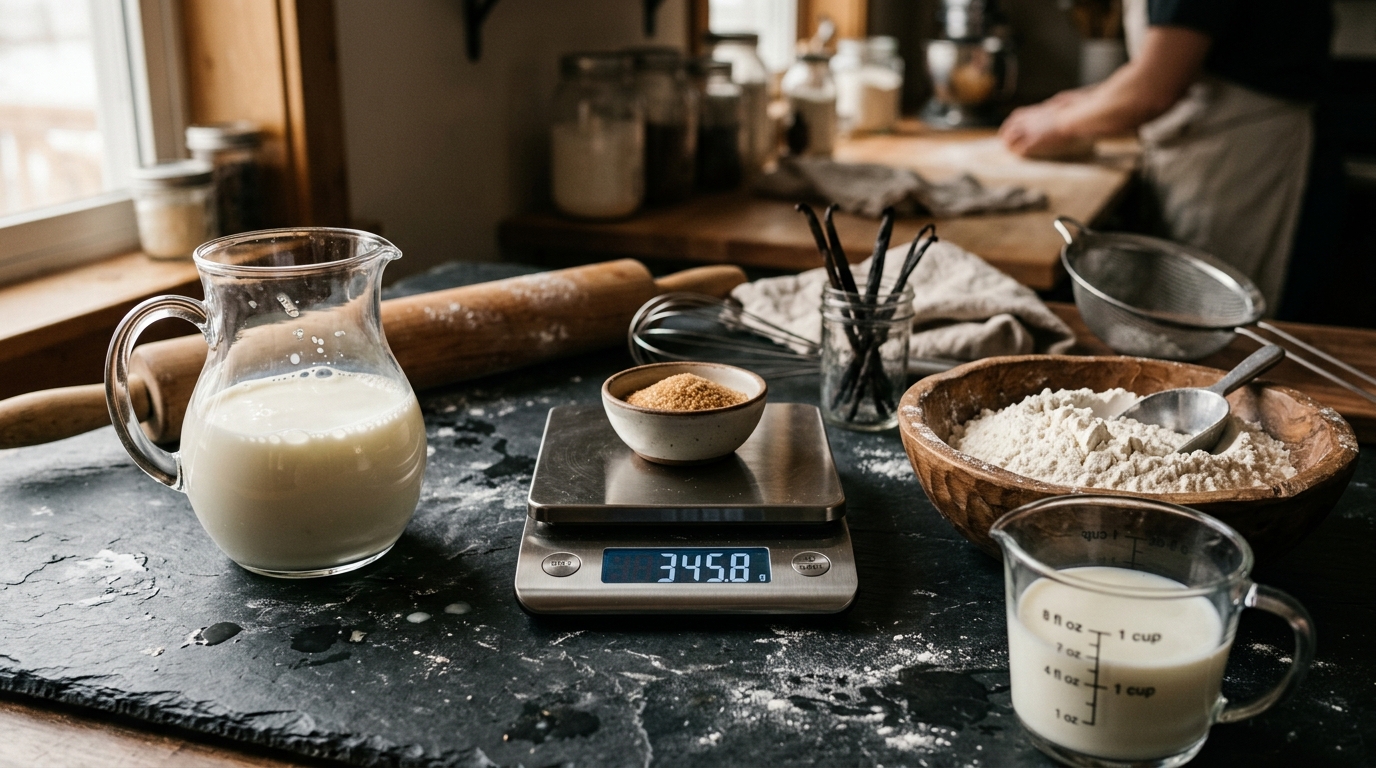 Figure 2: American measuring cup alongside British measuring glassware showing volume graduation markers.
How Many mL Are in a US Fluid Ounce?
Exact decimal values link American liquid measures with international metric standards.
US Fluid Ounce to mL
One US fluid ounce equals exactly 29.5735295625 milliliters under international metrology standards, rounded to 29.5735 mL in science and 30 mL on nutrition panels.
Converting US fl oz to mL
To convert US fluid ounces to milliliters, multiply ounces by 29.5735. An eight-ounce cup yields 236.59 milliliters. Use our ounces to mL converter for instant calculations.
Converting mL to US Fluid Ounces
To convert milliliters to US fluid ounces, divide milliliters by 29.5735, or multiply by 0.033814. A 500-milliliter container holds 16.907 US fluid ounces.
How Many mL Are in a UK Fluid Ounce?
The British Imperial fluid ounce provides an exact metric equivalent governing Commonwealth commerce and pub dispensing.
UK Fluid Ounce to mL
One UK Imperial fluid ounce equals exactly 28.4130625 milliliters under the Weights and Measures Act, recorded as 28.4131 mL in technical literature.
Converting UK fl oz to mL
To convert UK fluid ounces to milliliters, multiply ounces by 28.4131. A recipe requiring ten Imperial ounces needs 284.13 milliliters.
Converting mL to UK Fluid Ounces
To convert milliliters to UK fluid ounces, divide milliliters by 28.4131, or multiply by 0.035195. A 750-milliliter bottle holds 26.396 Imperial fluid ounces.
Visual Volume Comparison: US fl oz vs UK Imperial fl oz Across Standard Volumes
Figure 3: Metric milliliter comparison of American fluid ounces (cyan) and British Imperial fluid ounces (gold) across standard volume increments.
How to Convert Between US and UK Fluid Ounces
Direct conversions between American and British liquid units rely on conversion multipliers derived from their metric values.
US Fluid Ounces to UK Fluid Ounces
To convert American fluid ounces to Imperial fluid ounces, multiply the American value by 1.040843. Multiplying sixteen US fluid ounces yields 16.653 Imperial fluid ounces.
UK Fluid Ounces to US Fluid Ounces
To convert Imperial fluid ounces to American fluid ounces, multiply the Imperial value by 0.960760. Multiplying twenty Imperial ounces yields 19.215 US fluid ounces. Explore liquid pints in our cups in a pint guide.
Using mL as a Common Reference Point
Converting via milliliters removes regional ambiguity. Calculate initial ounces into milliliters first, then convert those milliliters into the target ounce standard.
US to UK Fluid Ounce Conversion Formula
Apply two standard mathematical formulas: UK fl oz equals US fl oz multiplied by 1.04084, and US fl oz equals UK fl oz multiplied by 0.96076.
Decision Flowchart: Handling International Liquid Measurements
Figure 4: Practical workflow for diagnosing recipe origin and eliminating liquid measurement errors through metric harmonization.
When Does the US vs UK Fluid Ounce Difference Matter?
In casual domestic situations, small liquid variations cause minor impact. In precision baking, medicine, and beverage packaging, cumulative discrepancies create serious issues.
Cooking and Baking Recipes
In delicate baking, liquid discrepancies disrupt gluten structure. Using an American pint (473 mL) in an English recipe expecting an Imperial pint (568 mL) leaves batter short by ninety-five milliliters.
Beverage and Bottle Measurements
British pubs must dispense draught beer in Imperial pints of twenty ounces (568 mL). Dispensing an American pint (473 mL) is unlawful in Britain. In cocktails, jigger variations skew balance.
Medicine and Liquid Doses
Liquid drugs have active concentrations per milliliter. Confusing American and British fluid ounces produces dangerous dosing errors. Clinical medicine strictly requires calibrated milliliters.
Product Labels and Packaging
Packaging laws require contents to match printed claims. Selling an imported 330-milliliter can as twelve ounces in America breaches trade standards, which mandate 354.9 milliliters.
International Recipes and Instructions
A Commonwealth recipe specifying one cup expects a 250-milliliter metric cup, whereas Americans use a 236.6-milliliter cup. Identifying recipe origin prevents culinary mishaps.
US, UK, and Metric Volume Measurements
Reviewing customary units alongside the metric system clarifies international volumetric standards.
US Fluid Ounces and Milliliters
The 1959 international yard and pound agreement fixed one inch at 25.4 millimeters. Because the US gallon occupies 231 cubic inches, this pact legally anchored one US fluid ounce at 29.5735295625 milliliters.
UK Fluid Ounces and Milliliters
The British Weights and Measures Act ties Imperial units to the metric system, defining one Imperial fluid ounce at 28.4130625 milliliters for clear packaging standards.
Why Milliliters Make International Conversions Easier
Milliliters provide a consistent decimal baseline globally. One milliliter represents one cubic centimeter across every laboratory, eliminating fractional math.
When to Use mL Instead of Fluid Ounces
Use milliliters when scaling culinary formulas, measuring medication, or exporting products. Reserve fluid ounces for local consumer shopping where customary glassware remains customary.
Common Examples of US vs UK Fluid Ounces
Reviewing everyday items illustrates how the gap between American and British fluid volume units functions in practice.
1 US fl oz vs 1 UK fl oz
One US fluid ounce holds 29.57 mL, while one UK fluid ounce holds 28.41 mL (a 1.16 mL variance).
8 US fl oz vs 8 UK fl oz
Eight US fluid ounces holds 236.59 mL, while eight UK fluid ounces holds 227.30 mL (a 9.29 mL variance).
16 US fl oz vs 16 UK fl oz
Sixteen US fluid ounces holds 473.18 mL (US pint), while sixteen UK fluid ounces holds 454.61 mL.
20 US fl oz vs 20 UK fl oz
Twenty US fluid ounces holds 591.47 mL, while twenty UK fluid ounces holds 568.26 mL (UK pint).
32 US fl oz vs 32 UK fl oz
Thirty-two US fluid ounces holds 946.35 mL (US quart), while thirty-two UK fluid ounces holds 909.22 mL.
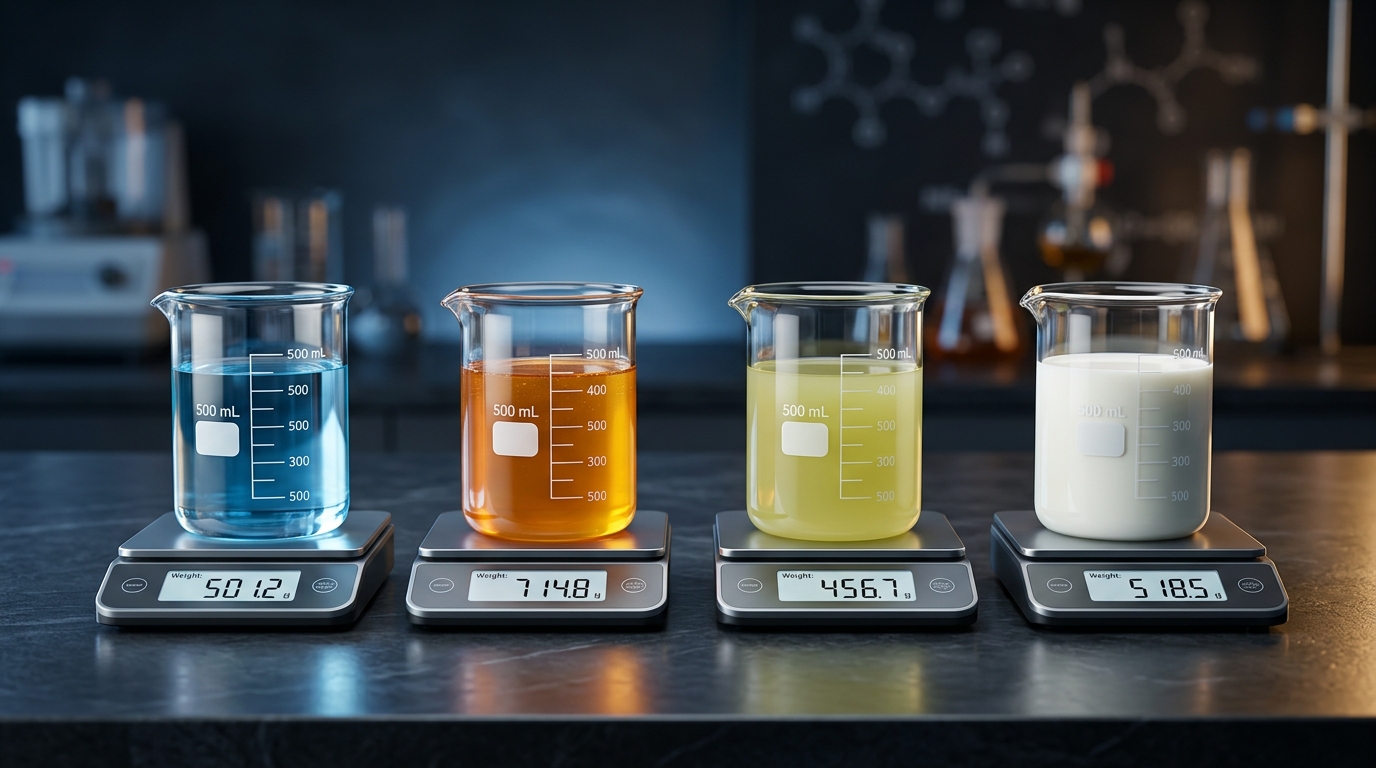 Figure 5: Graphic breakdown illustrating gallon hierarchy, pint capacities, and fluid ounce relationships.
Common Mistakes When Converting US and UK Fluid Ounces
Preventing errors requires recognizing common pitfalls when translating liquid measures across international borders.
Assuming All Fluid Ounces Are the Same
Never assume fluid ounces are uniform worldwide. Always confirm whether instructions use American Customary or British Imperial standards.
Confusing Fluid Ounces With Weight Ounces
Fluid ounces measure volume, while dry ounces measure weight. Use liquid cups for fluid capacity and scales for mass.
Mixing US and Imperial Measurements
Do not pair American cups (236.6 mL) with British Imperial pints (568.3 mL), which distorts ingredient proportions.
Using the Wrong Conversion Formula
Multiply by 1.04084 when converting US to UK ounces, and multiply by 0.96076 when converting UK to US ounces.
Rounding the Conversion Too Early
Avoid rounding 29.5735 to 30 mL during early steps to prevent compound calculation errors in large batches.
US vs UK Fluid Ounces FAQs
Why Are US and UK Fluid Ounces Different?
They differ because the US gallon divides into 128 fluid ounces of 29.57 mL, while the Imperial gallon divides into 160 fluid ounces of 28.41 mL.
Is a US Fluid Ounce Bigger Than a UK Fluid Ounce?
Yes, one US fluid ounce is 4.08 percent larger than a UK fluid ounce, measuring 29.5735 milliliters compared to 28.4131 milliliters.
How Many mL Are in a US Fluid Ounce?
One US fluid ounce contains exactly 29.5735 milliliters under official NIST metrological standards.
How Many mL Are in a UK Fluid Ounce?
One UK Imperial fluid ounce contains exactly 28.4131 milliliters under British statutory weights legislation.
Is 1 US fl oz the Same as 1 UK fl oz?
No, one US fluid ounce equals 1.041 UK fluid ounces, while one UK fluid ounce equals 0.961 US fluid ounces.
How Many UK Fluid Ounces Are in 1 US Fluid Ounce?
There are 1.04084 UK Imperial fluid ounces in one US fluid ounce.
How Many US Fluid Ounces Are in 1 UK Fluid Ounce?
There are 0.96076 US fluid ounces in one UK Imperial fluid ounce.
Are US and UK Fluid Ounces Used for the Same Things?
Both measure liquid goods, though Britain now mandates metric milliliters for trade while reserving fluid ounces for pub draughts.
Should I Use US or UK Fluid Ounces?
Use US fluid ounces for American recipes, Imperial fluid ounces for British literature, and milliliters for international clarity.
Is mL More Accurate Than Fluid Ounces for International Conversions?
Yes, milliliters provide a universal decimal reference that removes transatlantic volumetric discrepancies.